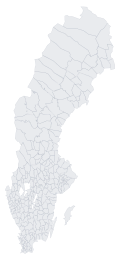
Södermanlands län
- Share 2025
- 28.3 %
- Δ 2015→2025
- +4.9 pp
- Immigration page
In depth · Strängnäs
Strängnäs ranks 106 of 290 municipalities for Share of residents with a foreign background (2025).
Source: SCB BE0101Q2 · 2025
Strängnäs ranks 6 of 9 in Södermanlands län for Share of residents with a foreign background (2025).
Source: SCB BE0101Q2 · 2025
Latest statistics: 2024–2025 depending on indicator
Strängnäs: 8,644 residents (22.0%) had a foreign background in 2025, out of 39,387 residents. Source: Statistics Sweden. Sweden, foreign background: 27.7%; difference −5.7 percentage points (2025). 6,597 residents were born abroad (16.7%, 2025).
Foreign background means born abroad or born in Sweden to two foreign-born parents. These are population stocks, not annual immigration flows.
Last updated: View changelog
Source: Statistics Sweden (SCB), BE0101Q2 — observed population composition (stock). People received further down are a flow and measure something else. Stock vs flow
Share of the population in Strängnäs with a foreign background. Source: Statistics Sweden (SCB), BE0101Q2. The 2025 observation uses the CKM disclosure-control method.
Residents by region of birth, 2024. This block uses 2024 data and may differ in year from the introduction above. Foreign-born are persons born outside Sweden. Source: Statistics Sweden (SCB), FolkmRegFlandK.
Received 2020–2024 (a flow), the Police's vulnerable areas and a own illustrative scenario.
Analysis/model Own illustrative scenario: mean annual reception 2020–2024 × Ruist’s national refugee life-cycle estimate using 2015 public finances, divided by 2024 population; no price adjustment. Assumes the national estimate applies locally. Not an observed municipal cost; not everyone with a foreign background. Formula, assumptions and limitations
Strängnäs is preselected. Add up to 5 other municipalities — or use the shortcuts for the top/bottom 5.
Max 6 municipalities. Source: SCB BE0101Q2 (UtlSvBakgGrov). · Strängnäs
Nearest municipalities (distance between municipal centre points) and municipalities in the same county with a similar share, plus county and national averages. Not all share a border with the municipality.
| Municipality | Share 2025 | Δ 2015→2025 | Immigration page |
|---|---|---|---|
| Södermanlands län | 28.3 % | +4.9 pp | |
| Sweden | 27.7 % | +5.5 pp | |
| Nyköping | 22.7 % | +5.6 pp | Immigration in Nyköping |
| Nykvarn | 22.2 % | +6.2 pp | Immigration in Nykvarn |
| Strängnäs | 21.9 % | +5.4 pp | |
| Trosa | 19.3 % | +3.5 pp | Immigration in Trosa |
| Gnesta | 17.7 % | +3.5 pp | Immigration in Gnesta |
| Ekerö | 17.5 % | +3.8 pp | Immigration in Ekerö |
Foreign background, all ages/sexes. County and national shares: own ratios of SCB published geographic counts; change 2015–2025 in percentage points. CKM method break 2025; subgroup cells may not sum to the published total. SCB
Links to the national page for each country of birth. Source: SCB BE0101E.
| Party | Share | vs 2022 | Votes | Seats |
|---|---|---|---|---|
| 31.76 % | – | 8,067 | 17 | |
| 23.07 % | – | 5,860 | 13 | |
| 15.74 % | – | 3,997 | 9 | |
| 5.81 % | – | 1,476 | 3 | |
| 4.98 % | – | 1,264 | 3 | |
| 4.85 % | – | 1,232 | 3 | |
| 4.61 % | – | 1,170 | 3 | |
| 4.30 % | – | 1,092 | 2 | |
| 3.49 % | – | 886 | 2 | |
| Other parties (11) | 1.40 % | – | 355 | – |
Latest actual election: 13 September 2026 (final count). Turnout figures in Kolada series elsewhere on this page refer to an earlier election and are labelled with their series year.
Full municipal election result →Results by voting district →
Schools, crime, economy, tax rate and elections are on the municipality's main page.
Open Strängnäs municipality in figures →In 2025, 22.0 % of the population in Strängnäs had a foreign background according to Statistics Sweden (BE0101Q2) — 5.8 percentage points below the national average (27.7 %). "Foreign background" is the broader Statistics Sweden definition and includes both people born abroad and people born in Sweden to two foreign-born parents. The share is a stock measure and does not show annual immigration (inflow).
8,644 residents of Strängnäs had a foreign background (2025). Source: Statistics Sweden, UtlSvBakgGrovCKM, published count. CKM-protected component cells need not sum exactly to the published total.
The share has risen from 11.9 % (2002) to 22.0 % (2025), a change of +10.1 percentage points. Source: Statistics Sweden (SCB), BE0101Q2.
Born abroad = a person born outside Sweden. Foreign background = born abroad, or born in Sweden to two foreign-born parents. Both measures are official; foreign background is at least as large for the same population and year.
See the "Country/region of birth" section on this page. Foreign-born residents are people born outside Sweden, reported in three aggregated groups: the Nordic countries excluding Sweden, the rest of Europe, and outside Europe. Source: Statistics Sweden (SCB), FolkmRegFlandK.
BE0101Q2Foreign/Swedish background — share by municipality (UtlSvBakgGrov)Reference period: 2002–2025 · Retrieved: 2026-10-11
Open source ↗FodelselandArKCKM / FolkmRegFlandKCKM; history FodelselandArKPopulation by region, region/country of birth and sexReference period: 2000–2025 · Retrieved: 2026-10-11
Open source ↗BE0101N1Population by municipality, age, sex and year (31 Dec)Reference period: 2002–2025 · Retrieved: 2026-08-13
Open source ↗ME0104General elections — votes per party and municipality (Election Authority via SCB)Each figure on this page is traceable to the dataset listed above. Missing data is left out — never shown as zero. Definitions, model and sources